What the Knicks Are Teaching Us About Building Great Teams
May 26, 2026
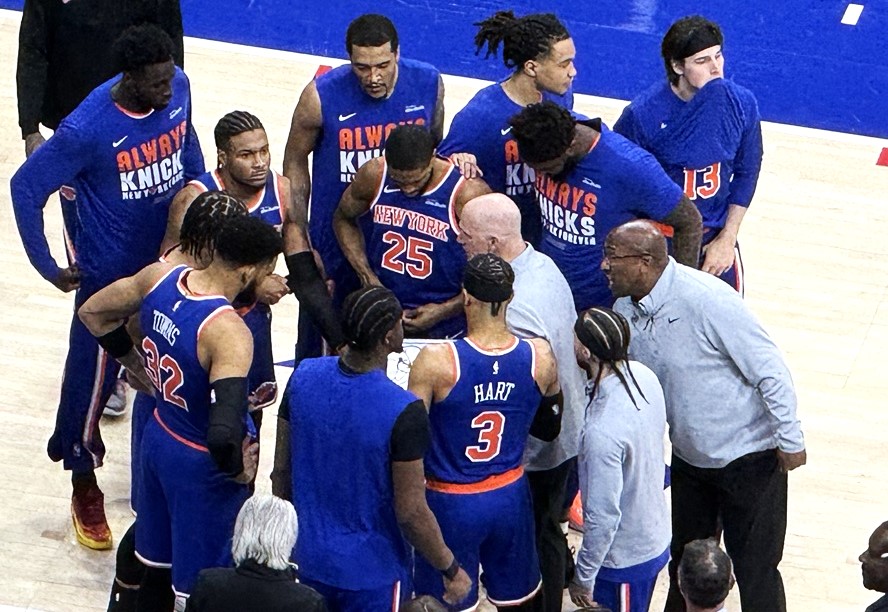
There are seasons in sports that transcend sports. The current run by the New York Knicks toward the NBA championship feels like one of them — not simply because of wins and losses, but because of what this team represents about leadership, culture, resilience, and collective purpose.
For organizations searching for lessons about building high-performing teams in uncertain times, the Knicks offer a powerful blueprint. At a moment when many workplaces are wrestling with ego, burnout, fragmentation, and the pressure for individual visibility, the Knicks are showing us that building something different can have profound results — one that many of us have been waiting for over 25 years! The New York Knicks have built and actualized a team where role players matter deeply, breakout moments can come from anyone, and the collective mission consistently outweighs personal acclaim. Perhaps most importantly, they have reminded us that culture is not built overnight. It is earned over years — sometimes decades — of belief.
Modern organizations often obsess over “stars.” We celebrate visionary CEOs, rainmakers, and top performers. But championship teams — like championship organizations — are rarely built on stars alone. The Knicks’ success has come from the connective tissue of the roster: players who defend relentlessly, sacrifice touches, dive for loose balls, rotate without complaint, and understand exactly how their role contributes to the whole. Every organization has people like this — the operations leader who quietly keeps everything moving, the chief of staff who sees around corners, the manager who stabilizes a struggling team, the CEO who mentors young talent, or the communicator who helps others shine. Too often, these individuals are treated as secondary characters. The Knicks remind us that role players are not peripheral to greatness; they are the architecture of it. Strong organizations create cultures where contribution matters more than spotlight.
One of the joys of watching this Knicks team has been seeing unexpected heroes emerge at critical moments. Players who may not dominate headlines suddenly become indispensable when the moment calls for it. Organizations should pay close attention to this. Breakout moments rarely happen because someone suddenly becomes talented overnight. They happen because people have been developed, trusted, prepared, and empowered long before the spotlight arrives. The best leaders understand this instinctively. They do not build organizations dependent on one superstar; they build deep benches. They create environments where emerging leaders can step forward confidently because the culture has already told them: we trust you, and you belong here. Too many organizations wait until a crisis to discover whether their people are ready. Championship cultures prepare people before they are urgently needed.
Perhaps the most striking aspect of this Knicks run is how little it appears driven by individual ego. There is joy in the passing, joy in the defense, and joy in the extra effort that rarely appears in a box score. In many workplaces, collaboration is talked about aspirationally but undermined operationally. Incentives reward individual performance over shared outcomes. Recognition flows unevenly. Silos quietly harden. The Knicks demonstrate something profound: when individuals willingly sacrifice for the collective, everyone becomes stronger. This does not mean suppressing ambition. It means aligning ambition with mission. The organizations that thrive long term are not the ones where everyone competes internally for credit, but the ones where people understand when to lead, when to support, when to defer, and when the mission matters more than personal recognition. That kind of maturity cannot be mandated. It must be modeled.
One of the defining emotional qualities of this team has been its visible generosity with one another. Players celebrate each other’s success. Coaches distribute praise. Veterans elevate younger teammates. Postgame interviews often sound less like self-promotion and more like gratitude. In organizations, spotlight-sharing is one of the clearest indicators of leadership confidence. Insecure cultures hoard credit. Healthy cultures distribute it. People remember who advocated for them publicly, who acknowledged their contributions in rooms they were not in, and who made success feel shared rather than transactional. Over time, this creates trust — and trust compounds. The Knicks look like a team that genuinely enjoys one another’s success, and that emotional chemistry is not soft or incidental. It is competitive advantage.
There is another quality that has made this Knicks run so compelling: the humanity of it. The best teams are not robotic; they are emotionally connected. You see it in the laughter on the bench, in the humility after wins, in the accountability after mistakes, and in the sense that this group genuinely understands how rare and meaningful this journey is. Organizations sometimes confuse seriousness with excellence, but high-performing cultures often have remarkable emotional range. They know when to push, when to reflect, and when to laugh together. Humility keeps teams coachable. Humor keeps teams resilient. Reflection keeps teams growing. Without those qualities, pressure eventually fractures people. With them, pressure can forge unity.
Behind every great team is usually a leader capable of creating clarity, accountability, and belief. The Knicks’ coaching staff has done more than design strategy; they have cultivated identity. That is the real work of leadership. Great coaches — and great organizational leaders — help people become more connected to a standard, a purpose, and one another. They create environments where effort is nonnegotiable, trust is visible, and accountability feels earned rather than performative. Importantly, they also understand that culture is built through consistency. Not speeches. Not slogans. Repetition. The Knicks did not become this team overnight. The culture was built possession by possession, practice by practice, setback by setback. That is how organizational transformation happens too.
At DRG, this philosophy sits at the center of our work every day. We partner with mission-driven organizations not simply to help them find talent, but to help them build cultures capable of sustaining excellence over time.
That means helping organizations recognize and elevate the role players who are often the backbone of success, investing in leadership development at every level, and designing organizational structures that allow people and teams to thrive together. Just as championship teams are built through trust, clarity, coaching, and shared purpose, strong organizations are built one person, one leader, and one relationship at a time. The most successful institutions are rarely powered by a single superstar alone; they are strengthened by cultures where people feel valued, connected to the mission, and empowered to contribute their best work collectively.
And then there are the fans. For decades, Knicks fans endured disappointment, false starts, frustration, and years where hope felt irrational. Yet they kept showing up. That loyalty says something important about organizations too. Employees, clients, donors, customers, and communities want something larger than transactional success. They want to believe in a mission worth enduring for. The organizations that inspire deep loyalty are not perfect. They are authentic. They create emotional connection. They make people feel part of something meaningful — even during difficult seasons.
When success finally comes after years of struggle, it feels deeper because people carried the hope together. That may be the greatest lesson of all from this Knicks run: championship cultures are not built solely through talent. They are built through belief sustained over time. And when belief, humility, purpose, leadership, and collective sacrifice finally align, people do not simply witness success. They feel ownership of it.
LET’S GO KNICKS!!!!